

Creating a Thriving Coastal Garden: Native Plants That Love Salt and Wind
Living near the coast is glorious — those views, that light, the sound of waves. But if you've ever tried to garden in a coastal environment, you know the reality isn't quite so romantic. Salt-laden wind scorches foliage. Exposed positions mean plants get battered constantly. Sandy soils drain so fast that moisture disappears within hours. It's enough to make you consider paving the whole lot.
Here's the good news: New Zealand's coastline has been growing plants successfully for millions of years. Our native coastal species have evolved precisely to handle these conditions. They don't just survive salt spray and howling winds — they genuinely thrive in them. The trick is choosing the right plants and understanding what makes coastal gardening different.
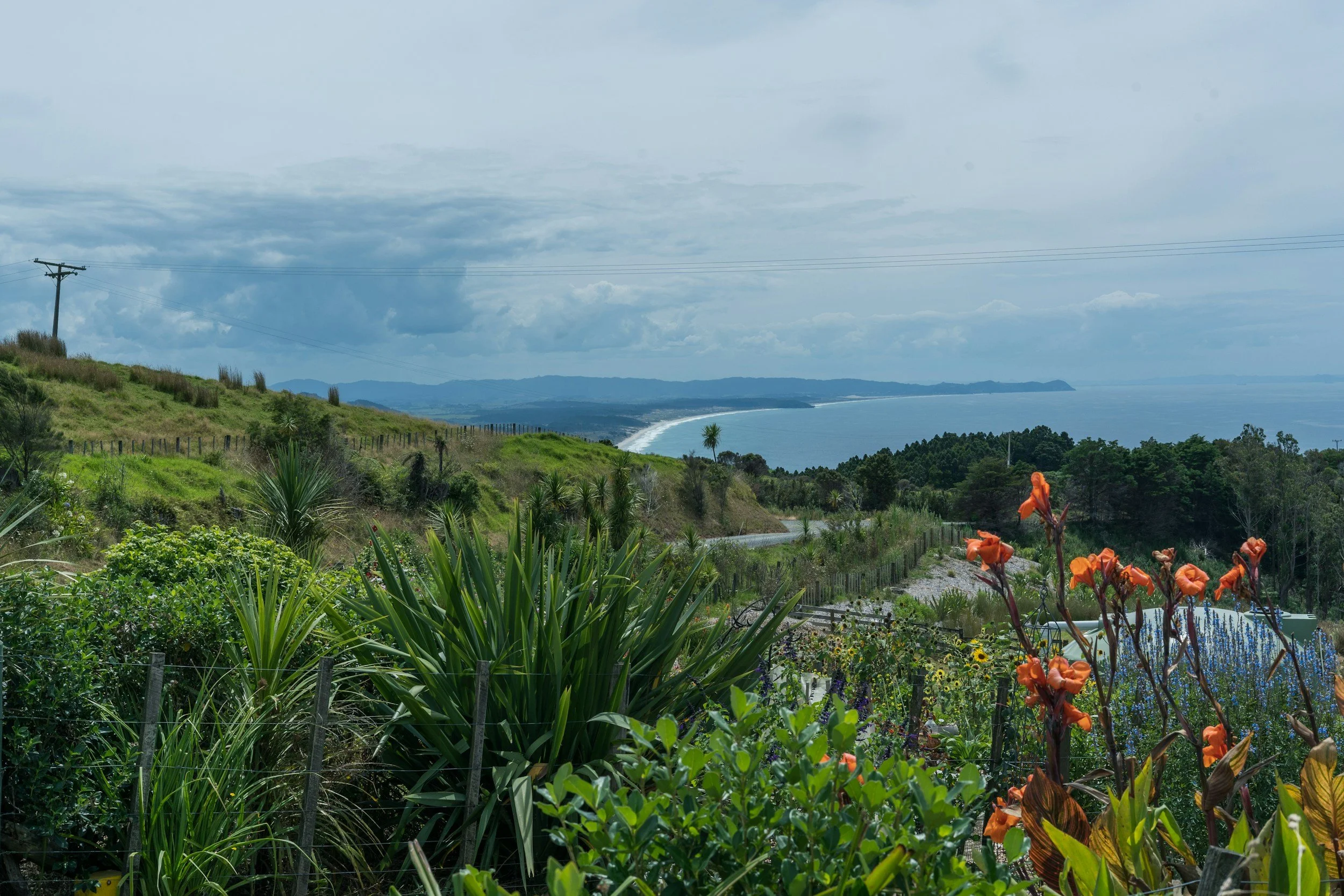
Understanding Coastal Conditions
Before we talk plants, let's understand what we're dealing with. Coastal gardens face a unique combination of challenges that rarely occur together inland.
Salt spray is the big one. Wind picks up tiny salt droplets from breaking waves and carries them inland, sometimes for several kilometres in strong onshore conditions. This salt deposits on leaves, draws moisture out of plant tissue, and effectively burns foliage. Plants without salt tolerance develop brown, scorched margins on leaves, lose foliage progressively, and often die.
Wind exposure is constant in most coastal areas. Even on calm days, there's usually a breeze. This wind increases water loss from leaves (transpiration), physically damages soft growth, and can prevent plants from ever developing their natural shape. Coastal plants tend to grow low and dense, shaped by the wind into streamlined forms.
Sandy soils are common near beaches. While they drain brilliantly (no waterlogging here), they also struggle to hold moisture or nutrients. Water applied in the morning has drained away by afternoon. Fertiliser washes through before plants can absorb it.
Intense light reflects off water and sand, increasing UV exposure. Combined with salt and wind, this light intensity can overwhelm plants adapted to sheltered conditions.
The Coastal Native Champions
These plants don't just tolerate coastal conditions—they prefer them. Put them in a sheltered inland garden and they'll grow, but they'll never look as good as they do with salt air and ocean breezes.
Pohutukawa (Metrosideros excelsa)
The ultimate coastal native. Pohutukawa evolved on New Zealand's northern coastlines and is supremely adapted to salt, wind, and poor soils. Those leathery leaves with silvery undersides are specifically designed to shed salt spray and reduce water loss. The spreading, wind-shaped form is functional beauty.
For smaller gardens, look for compact cultivars like 'Scarlet Pimpernel' (3-4m) or 'Vibrance' (2-3m). These maintain pohutukawa's coastal toughness at manageable sizes. Plant where they have room to develop their natural spreading form—fighting against their shape is pointless and ugly.
Taupata (Coprosma repens)
This glossy-leaved native grows right down to the high-tide line in the wild. Salt spray? Doesn't care. Wind?
Shapes itself around it. Sandy soil? Grows happily. Taupata is essentially indestructible in coastal conditions.
Use it as groundcover, low hedging, or mass planting for bank stabilisation. Numerous cultivars offer coloured foliage—'Coppershine' (bronze), 'Pacific Sunset' (orange-red), 'Evening Glow' (pink-tinged)—all maintaining excellent coastal tolerance. Space 80cm-1m apart for groundcover; plants will knit together within two years.
Ngaio (Myoporum laetum)
One of the toughest small coastal trees, ngaio grows 4-6 metres tall and tolerates everything coastal conditions throw at it. The bright green foliage is dense and rounded, creating excellent shelter for less tolerant plants behind it. Small white flowers attract bees; purple berries feed birds.
Ngaio is particularly valuable as a first-line windbreak. Plant it on the exposed boundary, let it establish and provide shelter, then plant more sensitive species behind it. Within five years, you've created a protected microclimate where a much wider range of plants can thrive.
Karo (Pittosporum crassifolium)
The coastal pittosporum, with thick, leathery leaves designed for salt tolerance. Dark green on top with pale felted undersides, the foliage is handsome year-round. Karo grows 3-6 metres depending on exposure—shorter and denser in windy positions, taller in sheltered spots.
The flowers are unusual—deep purple-red and honey-scented, appearing in spring. Female plants produce seeds that attract kereru. Karo makes excellent hedging or screening in coastal gardens, tolerating hard clipping if formal shapes are desired.
Coastal Hebe Species
Several hebe species are specifically adapted to coastal conditions. Hebe elliptica (koromiko) grows naturally on coastal cliffs throughout New Zealand. Hebe speciosa, from the North Island's west coast, is one of our most beautiful hebes with large purple flower spikes.
Modern hebe cultivars bred from coastal species maintain that coastal tolerance. 'Wiri Mist', 'Wiri Charm', and the 'Wiri' series generally handle coastal conditions well. Plant in groups of three or five for maximum impact; their flowering display against a backdrop of ocean is genuinely stunning.
Flax (Phormium species)
Both Phormium tenax (harakeke) and Phormium cookianum (wharariki) grow naturally in coastal environments. Their sword-like leaves are tough and waxy, shedding salt spray easily. The dramatic form provides instant architectural impact—plant a single large flax as a focal point or mass smaller cultivars for textural effect.
Cultivated varieties range from compact (60cm) to substantial (2-3m). Coloured cultivars—bronze, red, striped, variegated—add drama to coastal plantings. Most maintain good coastal tolerance, though some highly bred ornamental forms may be slightly less robust than straight species.
Creating Shelter: The Coastal Garden Strategy
The most successful coastal gardens work with wind rather than against it. The strategy is layered shelter— tough plants on the boundary creating protection for progressively more sensitive plants behind them.
First line (boundary): Plant the toughest species directly into coastal exposure. Pohutukawa, ngaio, taupata, karo—these can handle unfiltered salt and wind. Space generously and let them develop natural wind-shaped forms.
Second line: Behind your boundary planting, conditions are already moderated. Here you can introduce slightly less tolerant species—griselinia, coastal olearia, larger hebes. This layer adds diversity while benefiting from the shelter ahead of it.
Third line (closest to house): With two layers of shelter established, you've created a microclimate significantly calmer than the exposed boundary. Many plants that would fail in direct coastal exposure will thrive here—including some that aren't specifically coastal species.
Timing matters: Plant your boundary shelter first, even if it means waiting a season or two before planting the rest. Those establishing plants are creating the conditions that make everything else possible.
Dealing with Sandy Soils
Coastal sandy soils need different treatment than heavy inland clays. The priority isn't improving drainage (you've got plenty) but improving moisture and nutrient retention.
Organic matter is everything. Incorporate generous amounts of compost when planting—at least 30% compost mixed with existing sand. This organic matter acts like a sponge, holding moisture and nutrients that would otherwise drain straight through.
Mulch heavily. A thick layer (10cm) of organic mulch reduces evaporation, keeps roots cooler, and slowly breaks down to improve soil. Top up mulch annually—it disappears faster in sandy soils than in clay.
Water deeply and less frequently. Shallow watering just wets the surface and evaporates. Water less often but for longer, encouraging roots to grow deep where moisture is more consistent.
Feed little and often. In sandy soils, a single large fertiliser application washes through before plants can absorb it. Use slow-release fertilisers, or apply liquid feed in small amounts regularly through the growing season.
Native Groundcovers for Coastal Gardens
Covering bare ground reduces salt and sand damage to plants above while stabilising soil against wind erosion.
These groundcovers handle full coastal exposure.
Muehlenbeckia complexa (pohuehue/wire vine) is extraordinarily tough, spreading rapidly to cover banks and difficult areas. It tolerates salt, wind, drought, and poor soil. Can be vigorous—plant where spreading is welcome, or be prepared to trim boundaries.
Selliera radicans creates low, dense mats of small rounded leaves that handle salt spray beautifully. The tiny white flowers are charming up close. Excellent between pavers or as lawn alternative in low-traffic coastal areas.
Disphyma australe (native ice plant) is a succulent groundcover that thrives in harsh coastal conditions. Pink flowers smother the fleshy foliage in summer. Perfect for sandy areas and bank stabilisation.
Coprosma acerosa (sand coprosma) has fine, tangled foliage in grey-green or bronze tones. It sprawls across sandy ground, tolerating full coastal exposure. The red berries on female plants provide food for coastal birds.
Common Coastal Garden Mistakes
Planting inland species in exposed positions. That beautiful Japanese maple might be tempting, but it will not survive coastal exposure. Choose coastal-adapted species for exposed positions; save sensitive plants for sheltered microclimates.
Fighting wind-shaped forms. Coastal plants grow asymmetrically, shaped by prevailing wind. This is natural and attractive. Trying to prune them into symmetrical shapes fights their nature and creates constant maintenance.
Underestimating salt penetration. Salt spray travels further inland than you'd expect, particularly during storms. Gardens 500m from the beach may still experience significant salt exposure. Observe existing vegetation for clues about salt levels.
Neglecting windbreaks. Jumping straight to ornamental planting without establishing shelter first leads to years of struggling plants. Invest in boundary shelter before anything else—it's not glamorous, but it's essential.
Your Coastal Garden Vision
Coastal gardens have a particular aesthetic—tough, sculptural plants shaped by wind, punctuated by dramatic flax and grasses, softened by flowering hebes and groundcovers. It's a look that can't be replicated inland, uniquely connected to place.
Work with your conditions rather than against them. Choose plants that love salt and wind. Build shelter strategically. Improve sandy soils with organic matter. And appreciate the particular beauty of a garden shaped by coastal forces—there's nothing quite like it anywhere else.
Your pohutukawa will lean away from the prevailing wind. Your flax will tilt dramatically after storms. Your ngaio will develop that characteristic coastal density. This isn't imperfection—it's your garden responding to its environment, becoming part of the coastal landscape rather than fighting against it.
That's the kind of garden worth creating.
