

Understanding Native Plant Hardiness: What Will Survive Your Garden
Right, you've seen a gorgeous native plant at the garden centre and you're wondering "will this actually survive in my garden?" It's a proper frustration, isn't it? Plant labels often give vague information or reference overseas climate zones that don't translate to New Zealand conditions. Here's the thing: understanding plant hardiness - what will genuinely thrive versus what will struggle or die - is crucial before you buy. Let's work out how to assess whether plants will suit your specific garden conditions, so you're not wasting money on plants doomed to fail.
The secret is understanding that "native" doesn't automatically mean "will grow anywhere in NZ." Our country has remarkably diverse climates, and natives have evolved for specific conditions. A coastal Auckland native might struggle in inland Otago, and vice versa.

New Zealand's Climate Diversity
We pack extraordinary climate variation into a small country. Understanding your specific climate type is the foundation of choosing appropriate plants.
Warm temperate (Auckland, Northland, Bay of Plenty): Mild winters with rare frosts, warm humid summers, relatively high rainfall. Longest growing season. Can grow slightly tender plants that struggle elsewhere. Your challenge is humidity-related fungal diseases rather than cold damage.
Cool temperate (Wellington, Waikato, Taranaki): Moderate temperatures year-round, regular frosts inland but coastal areas milder, reliable rainfall, windy in some areas. True four-season climate. Can grow most natives but very tender species may struggle with occasional cold snaps.
Dry temperate (Canterbury, Marlborough, Hawke's Bay): Warm to hot dry summers, cold winters with hard frosts, low rainfall (particularly eastern areas), strong winds at times. Your challenge is drought and frost combined - plants need to handle both extremes.
Alpine/sub-alpine (Central Otago, high country): Short intense summers, very cold winters with hard frosts and snow, low rainfall, huge temperature variations. Extremely limited growing season. Only genuinely hardy plants survive. Your advantage is intense light and low humidity.
West Coast: High rainfall, mild temperatures, high humidity, moderate seasonal variation. Never extremely hot or extremely cold. Can grow moisture-loving species that struggle in drier areas. Your challenge is excessive moisture and fungal diseases.
Frost Hardiness: The Key Factor
For most of New Zealand, frost tolerance is the primary hardiness concern. Understanding frost ratings helps you choose appropriately.
Frost-free (tender) plants: Cannot tolerate any frost. Foliage damaged at 0°C or above. Examples: Metrosideros cultivars (many), Clianthus, some Coprosma cultivars. Suitable for coastal Auckland, Northland, and very sheltered microclimates elsewhere. If you get frosts, don't plant these.
Light frost tolerant (borderline hardy): Handle occasional light frosts (-2 to -3°C) but damaged by harder frosts. Examples: Cordyline australis (some cultivars), Phormium 'Jester', various subtropical-origin plants. Suitable for milder areas or very sheltered spots. In frost-prone areas, expect occasional damage.
Moderate frost hardy: Handle frosts to about -5 to -7°C without significant damage. Examples: Phormium tenax (most), Coprosma repens, Griselinia littoralis, Pittosporum varieties. Suitable for most of New Zealand including areas with regular moderate frosts. This is your safe bet for broad climate range.
Very frost hardy: Handle hard frosts to -10°C or below. Examples: Coprosma acerosa, many alpine Hebe species, Chionochloa (tussocks), Carex species (most). Suitable for anywhere in NZ including high country and cold inland areas. If you're in genuinely cold areas, focus on these.
Assessing Your Garden's Conditions
Before choosing plants, honestly assess your specific garden conditions. Microclimates within your property can vary significantly.
Frost pockets: Cold air flows downhill and pools in low spots, creating frost pockets significantly colder than surrounding areas. Valleys, hollows, and flat low-lying areas experience harder frosts than slopes. If your garden is in a frost pocket, you need genuinely hardy plants regardless of general regional climate.
Sheltered spots: Areas protected by buildings, walls, or established trees create warmer microclimates. North-facing walls, enclosed courtyards, or areas under tree canopies can be several degrees warmer than exposed areas. These spots allow growing plants rated borderline for your area.
Exposed sites: Hilltops, coastal properties, or open areas without shelter experience more extreme conditions than protected areas. Wind chill effectively lowers temperatures; coastal salt spray adds additional stress. In exposed sites, choose plants rated hardier than your general area suggests necessary.
Soil drainage: Well-drained soil increases hardiness. Plants sitting in waterlogged soil over winter are more susceptible to cold damage than the same species in well-drained soil. If your soil is poorly drained, either improve it or choose plants that tolerate both wet and cold.
Sun exposure: Full sun areas heat up more in summer, increasing drought stress but also warming soil, potentially reducing frost severity slightly. Shaded areas stay cooler in winter, potentially experiencing heavier frosts. Consider sun exposure when positioning plants at their hardiness limits.
PLANNING A WIND-EXPOSED GARDEN?
Skip the guesswork with Wind Garden - a ready-made 3m × 5m naturalistic planting plan designed specifically for exposed conditions.
Complete planting layout · exact quantities & spacing · full planting and maintenance guide
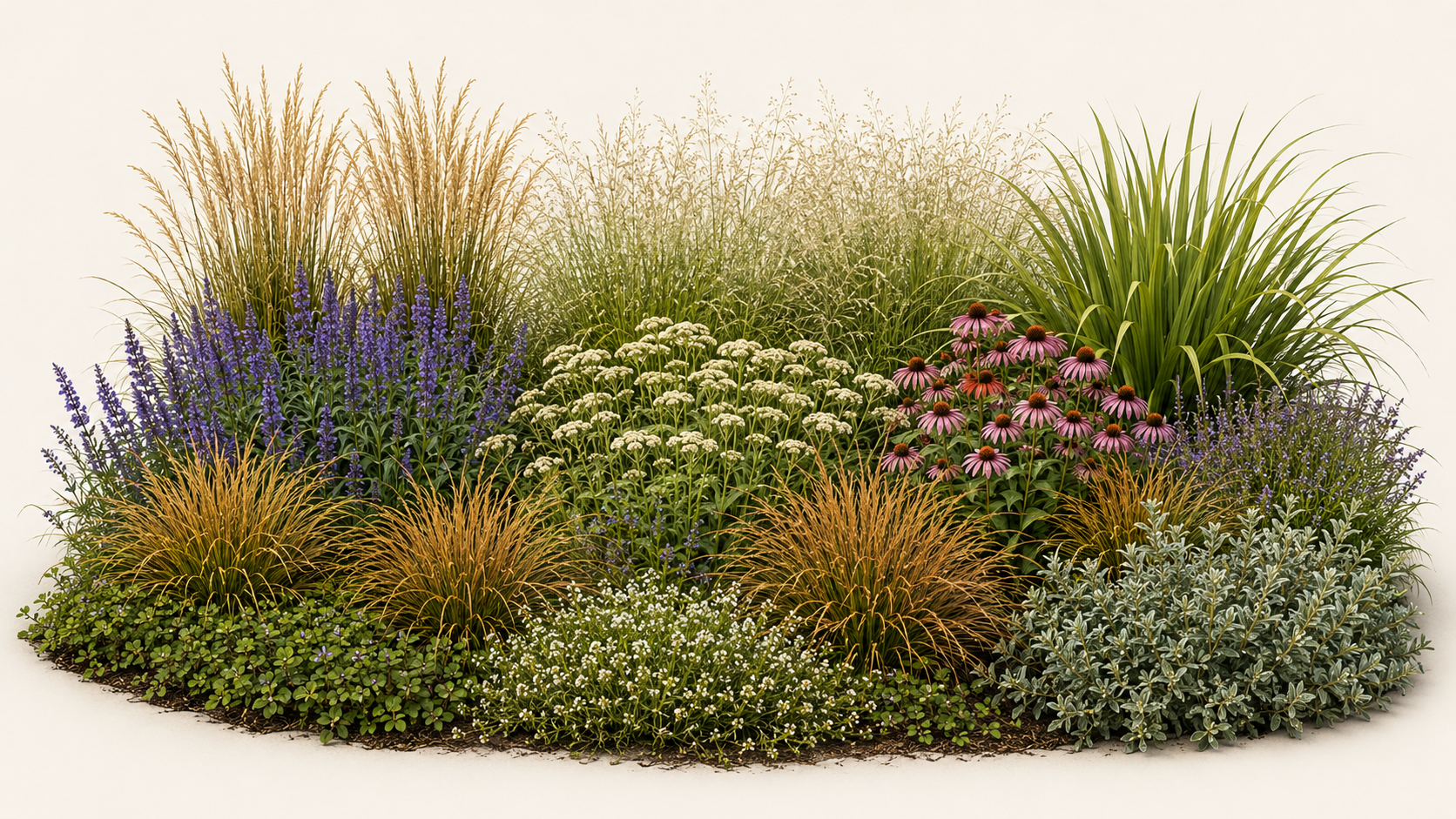
A naturalistic planting plan for sunny, exposed gardens.
Wind can make choosing plants difficult. The Wind Garden takes the guesswork out of it.
This ready-made 3 × 5 metre planting plan brings together tough New Zealand natives, ornamental grasses and flowering perennials chosen to cope with exposed conditions while creating a garden that feels soft, layered and alive.
The planting has been designed in a naturalistic, new-perennial style. Grasses move with the wind, flowering perennials bring seasonal colour and support pollinators, and low-growing native plants weave through the garden to create a more resilient planted layer.
Rather than fighting an exposed site, this garden is designed to work with it.
15 m² · 47 plants · Full sun · Exposed sites · Wellington region
Is this plan right for your garden?
This plan is designed for a garden that:
is approximately 3 × 5 metres
receives at least 6 hours of direct sun
has average to free-draining soil
experiences regular wind and exposure
is in Wellington City, Lower Hutt, Porirua, sheltered parts of the Kāpiti Coast, or similar conditions
suits a naturalistic garden rather than a formal, tightly clipped style
It can also work in Upper Hutt, although colder and frost-prone sites may need some additional consideration.
The plan isn't intended for deeply shaded gardens, permanently wet soil or extremely exposed seafront sites receiving regular salt spray.
What you'll receive
This isn't just a picture showing where to put some plants.
You'll receive a complete digital planting plan and guide designed to take you from an empty garden bed through to an established garden.
Your PDF includes:
the complete planting layout
numbered plant positions
exact plant quantities
centre-to-centre planting distances
mature plant sizes
information on every plant
soil, sun and site requirements
site preparation
step-by-step planting instructions
guidance on buying plants and pot sizes
first-year establishment and watering
wind-specific planting advice
ongoing maintenance
a maintenance-at-a-glance guide
troubleshooting
plant substitution guidance
advice for adapting the plan to a slightly different-sized bed
what to expect as the garden develops over its first three years
a practical planting-day guide
You can print the plan and take it outside with you while you plant.
What if my garden isn't exactly 3 × 5 metres?
It doesn't have to be exact.
The plan includes guidance for adapting the planting to a bed that is moderately smaller or larger while maintaining the intended spacing and relationships between plants.
For significantly larger gardens, parts of the planting matrix can be repeated rather than simply stretching plants farther apart.
The Wind Garden
Ready-made naturalistic planting plan + complete planting guide
Garden size: 3 × 5 m / 15 m²
Plants: 47
Plant varieties: 10
Light: Full sun
Exposure: Windy / exposed
Soil: Average to free-draining
Region: Wellington and similar lower North Island conditions
Maintenance: Low–moderate once established
Format: Digital PDF
Digital product. No physical plants are supplied.
Native Plant Origin and Hardiness
Understanding where natives evolved helps predict their hardiness in your garden.
Coastal origin: Plants like Coprosma repens, Metrosideros excelsa (pohutukawa), Phormium tenax evolved in coastal conditions. They handle salt, wind, and mild temperatures brilliantly but may struggle with hard inland frosts or extreme heat. Best for coastal or milder areas.
Lowland forest origin: Many shrubs and small trees evolved in lowland forests - moderate temperatures, shelter, reasonable moisture. Examples: Griselinia, Pittosporum, many Coprosma species. These are middle-ground plants - moderately hardy, adaptable to various conditions. Safe bets for most gardens.
Alpine origin: Plants like alpine Hebes, Chionochloa, Raoulia evolved above treeline in extreme conditions. They handle frost, snow, intense sun, and wind brilliantly but may struggle with humid coastal conditions or shade. Perfect for cold, exposed, or high-altitude gardens.
Northern origin: Species naturally occurring only in Northland or Auckland (various Metrosideros cultivars, some subtropical types) evolved in mild conditions. Frost tolerance is limited. Best kept to warmer regions or very sheltered spots elsewhere.
Reading Plant Labels and Information
"Hardy" without qualification: Vague and unhelpful. Hardy where? In what conditions? Always seek specific temperature ratings or regional guidance.
Temperature ratings (-5°C, -10°C, etc.): These indicate minimum temperatures plants tolerate. Compare to your area's typical minimum winter temperatures. If your area reaches -8°C and plant is rated to -5°C, it's borderline and will likely experience damage in cold years.
"Coastal hardy" or "alpine hardy": Indicates plant handles specific conditions (salt/wind for coastal, cold/exposure for alpine) rather than general hardiness. A "coastal hardy" plant might not handle inland frosts despite being tough in its native environment.
"Suitable for zones 8-10" (USDA zones): These overseas zone systems don't translate well to NZ. Our zones don't match Northern Hemisphere equivalents due to different seasonal patterns, day length, and rainfall distribution. Treat these as very rough guides only.
Regional suitability lists: These are most helpful - "suitable for Auckland", "Canterbury hardy", etc. Based on actual NZ conditions rather than overseas zones. Trust these over international zone ratings.
Testing Borderline Plants
If you want to trial plants rated borderline for your area, smart strategies reduce risk.
Start with sheltered spots: Position borderline plants in warmest microclimates - north-facing walls, enclosed courtyards, under eaves. If they thrive there, you know they work. If they struggle, at least you've given them best chance.
Plant in spring: Spring planting allows full growing season to establish before first winter. Well-established plants are hardier than newly planted ones. Autumn planting of borderline species means facing winter before establishing properly.
Provide frost protection first winter: Frost cloth, temporary shelters, or even just positioning something to break frost formation overhead can protect borderline plants through critical first winter. Once established, they're often hardier.
Accept occasional damage: Some borderline plants may get tip burn or leaf damage in occasional cold years whilst thriving normally. If you can accept occasional cosmetic damage, you expand your palette. Some damage isn't death.
Have backup plants: If trialing expensive or special plants at their hardiness limit, consider buying two. Plant one in prime position, one in slightly less ideal spot. Hedges your bets if one struggles.
Regional Hardiness Guides
Auckland and Northland: You can grow almost anything including tender species. Your limitation is humidity and fungal diseases rather than cold. Focus on good air circulation and drainage rather than worrying about hardiness. Frost-free rated plants are fine here.
Waikato, Bay of Plenty, Taranaki: Moderate climate allows most natives. Inland areas get frosts, coastal areas milder. Choose plants rated moderate frost hardy (-5 to -7°C minimum) for inland areas, light frost tolerant fine for coastal. Your sweet spot is middle-range hardy plants.
Wellington: Coastal areas very mild (similar to Auckland coastally) but inland and hill suburbs get frosts. Wind is your bigger challenge than cold. Choose wind-resistant species first, frost tolerance second. Coastal-hardy plants excel here if wind-tolerant.
Gisborne, Hawke's Bay: Coastal areas mild, inland areas get significant frosts. Dry summers mean drought tolerance matters as much as frost tolerance. Choose plants handling both dry and moderate frost (-5 to -7°C). Alpine species often do well here despite being sea-level - they like dry conditions.
Marlborough, Nelson, Tasman: Variable - coastal very mild, inland valleys get hard frosts. Frost pockets can be severe in Wairau and other valleys. Choose plants rated to -7 to -10°C for inland areas, lighter frost tolerance fine coastally.
Canterbury, Otago: Cold winters with hard frosts (-8 to -12°C inland areas, -5 to -8°C coastal), hot dry summers. Choose plants rated very frost hardy (-10°C minimum). Alpine species excel. Avoid tender or borderline species unless in extremely sheltered urban areas.
West Coast: Mild temperatures, high rainfall, high humidity. Cold hardiness less important than moisture tolerance and fungal disease resistance. Choose moisture-loving species, ensure excellent drainage and air circulation.
Southland: Cold winters, moderate summers, reliable rainfall, significant wind exposure. Choose very hardy species (-10°C or below). Alpine and cold-tolerant species do well. Avoid tender species entirely.
When "Hardy" Plants Struggle
Even appropriately hardy plants can struggle if other conditions aren't right.
Wet feet in winter: Many cold-hardy natives tolerate frost but not wet+cold combination. Poor drainage reduces effective hardiness significantly. Improve drainage or choose species specifically tolerant of wet winters.
Drought stress before winter: Plants entering winter already stressed from drought are less cold-hardy than well-watered equivalents. Ensure adequate autumn watering so plants go into winter in good condition.
Soft growth from over-feeding: Plants grown with high nitrogen fertilizer produce soft, lush growth that's less frost-tolerant than lean-grown equivalents. For natives in frost-prone areas, avoid heavy feeding that encourages soft growth before winter.
Young vs established plants: Newly planted specimens are always less hardy than established ones. Even genuinely hardy species benefit from frost protection their first winter whilst establishing.
Exposed new growth: Spring growth is tender regardless of plant's overall hardiness. Late frosts can damage new shoots even on hardy plants. This is normal and plants recover, but it's why late frost can be more damaging than earlier harder frost.
Your Plant Selection Strategy
Know your coldest temperature: Check local climate data or talk to longtime local gardeners. What's your typical minimum winter temperature? Your coldest recorded? Use the coldest as your guide for hardy plant selection.
Assess your microclimates: Walk your garden in winter. Where are frost pockets? Sheltered spots? Exposed areas? Match plants to specific microclimates rather than treating whole garden uniformly.
Start with bulletproof species: For your first natives or plantings in challenging spots, choose plants rated well within your hardiness zone. Success builds confidence for trying slightly more challenging species later.
Gradually test boundaries: Once you've got some successes, try borderline species in your warmest spots. You'll gradually learn what works in your specific conditions versus general regional ratings.
Accept regional limitations: Some plants genuinely won't work in your area. Auckland gardeners can't successfully grow plants requiring cold winters (some alpines). Otago gardeners can't grow tender subtropical species. Work with your climate rather than fighting it.
Understanding hardiness transforms plant shopping from hopeful gambling to informed decision-making. You'll choose plants genuinely suited to your conditions, avoid expensive failures, and create gardens that thrive rather than merely surviving. That's proper smart gardening!
Related Articles
You might also enjoy:
How to Create a Low-Maintenance Native Garden That Thrives Year-Round - Choose hardy plants that suit your conditions
Best Native Plants for Auckland Gardens - Regional plant selection
Canterbury's Dry Summer Gardening Solutions - Region-specific hardiness
Wellington Wind-Resistant Gardening Strategies - Matching plants to challenging conditions
Water-Wise Gardening in New Zealand - Drought hardiness matters too
