

Designing Small Courtyards: Maximising Space with Clever Plant Choices
You've got a small courtyard - maybe it's just 3 metres by 4 metres, perhaps it's tucked between walls, possibly it's that awkward space behind your townhouse. Whatever the case, you're wondering how on earth to make it feel like an actual garden rather than a cramped afterthought. Here's the brilliant news: small courtyards can be absolutely magical when you work with their intimacy rather than fighting against their size.
The secret isn't cramming in as many plants as possible. It's about choosing the right plants - ones that look good close-up, maintain their shape without constant pruning, and create layers of interest in a compact space. Let's transform that small courtyard into your favourite outdoor room.
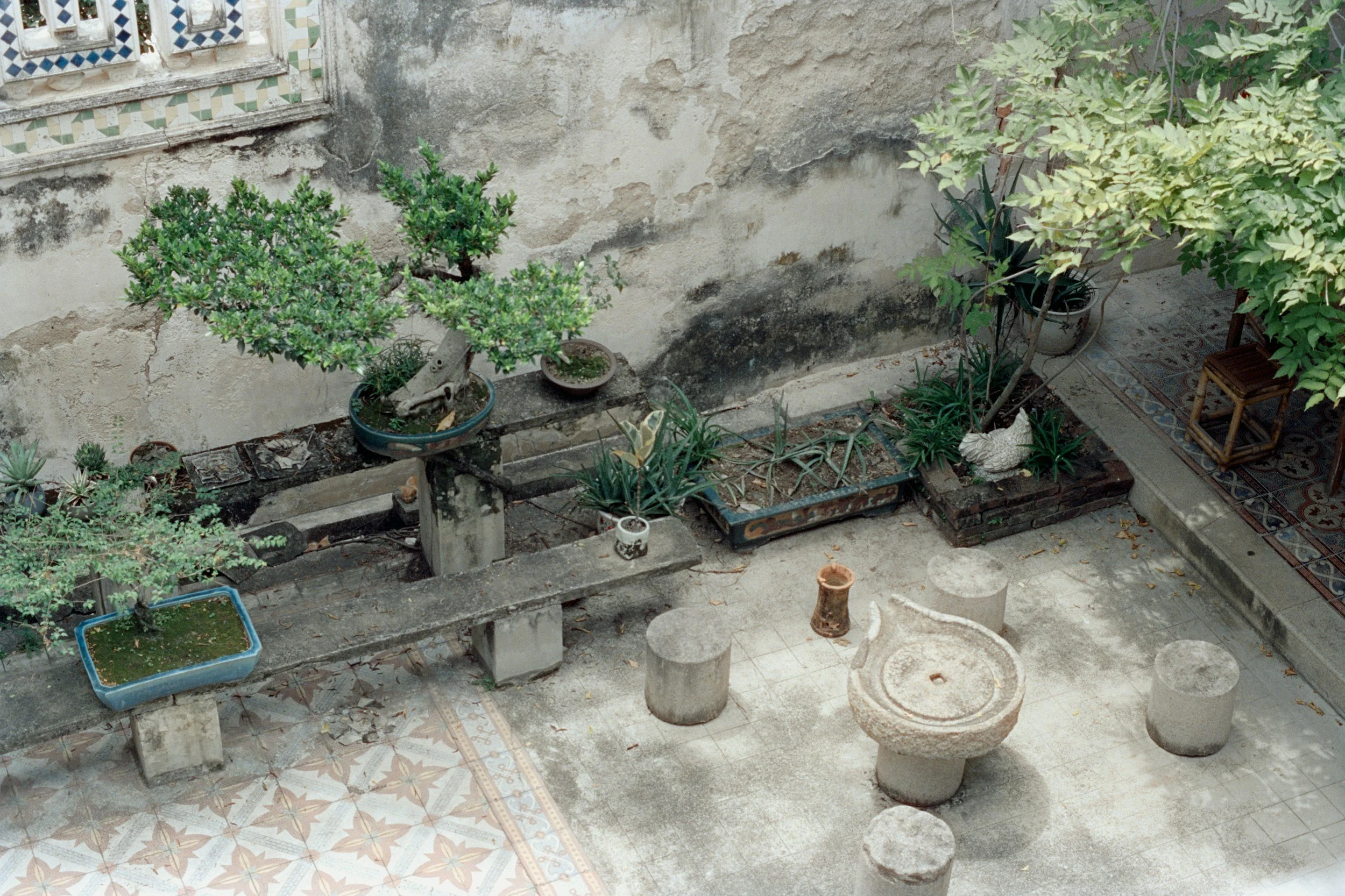
Why Small Courtyards Are Actually Brilliant
Before we dive into plant choices, let's appreciate what you've got. Small courtyards offer advantages that larger gardens simply can't match.
Shelter: Surrounded by walls or fences, courtyards create protected microclimates. You can grow slightly tender plants that would struggle in exposed gardens. Wind isn't battering everything. It's genuinely cosy.
Intimacy: Everything is close enough to appreciate properly. You'll notice the texture of fern fronds, smell fragrant flowers, and watch insects visiting blooms. It's gardening at its most connected and mindful.
Low maintenance: Less space means less work. You can afford to be more precise with plant care because there simply aren't as many plants demanding attention. Quality over quantity makes maintenance manageable.
Privacy: Proper planting creates a genuine outdoor sanctuary. Screen sightlines cleverly and you'll have a private retreat despite being in an urban environment. Your own little secret garden.
The Golden Rules for Courtyard Planting
Small spaces have different rules. What works in sprawling gardens often fails miserably in courtyards. Here's what actually works.
Choose plants for close inspection: You'll be viewing plants from just a metre or two away, so they need to look good up close. Avoid plants that get scruffy or leggy. Choose ones that maintain tidy habits naturally and have attractive foliage year-round.
Think vertically: When you can't go outward, go upward. Walls are valuable real estate. Climbing plants, wall-mounted planters, and trained specimens use vertical space brilliantly without eating into precious floor area.
Layer carefully: Even in tiny spaces, layering creates depth. Tall plants at the back or sides, medium height in the middle, ground covers or low plants at the front. This makes spaces feel larger and more complex than they actually are.
Limit your palette: This is crucial. Too many different plants in a small space creates chaos. Choose perhaps 5-7 plant varieties and repeat them. This creates cohesion and makes the space feel calmer and larger.
Consider mature size religiously: That cute baby Phormium tenax will reach 2 metres tall and wide. In a 3-metre courtyard, that's ridiculous. Choose compact varieties that actually fit the space when fully grown.
Brilliant Natives for Courtyard Walls
Vertical space is your secret weapon. These climbers and wall plants maximize green coverage without stealing floor space.
Clematis paniculata: Our native clematis is absolutely perfect for courtyards. It produces masses of white, fragrant flowers in spring, covering walls beautifully. Deciduous, so you get winter sun through bare stems. Grows to about 4-5 metres but easily pruned to fit. Tie stems to supports initially; it'll then climb itself. Part shade to full sun. The fragrance is genuinely lovely - it fills small spaces beautifully.
Ferns on walls: Mount epiphytic ferns like Pyrrosia eleagnifolia (leather leaf fern) directly onto walls or in wall-mounted pots. They create living wall effects without soil beds eating floor space. Particularly brilliant for shady courtyard walls. Asplenium bulbiferum (hen and chickens fern) also works mounted or in wall pots. Minimal maintenance once established.
Trained Coprosma: While not naturally climbing, Coprosma varieties can be trained flat against walls using wires or trellis. Coprosma repens or 'Pacific Sunset' trained espalier-style creates living wall coverage that's tough, attractive, and space-efficient. Secure stems horizontally as they grow, creating fan shapes against walls.
Compact Structural Plants for Impact
These plants provide structure and presence without overwhelming small spaces. They're the bones of your courtyard design.
Cordyline 'Red Star': Dramatic burgundy-red foliage creates impact in a tidy upright form. Grows to about 1.5 metres tall but only 60cm wide - perfect courtyard proportions. Plant in pots or garden beds. Brilliant as a focal point. Looks particularly stunning with evening light behind it. Sun to part shade.
Pseudopanax 'Cyril Watson': Compact lancewood with distinctive serrated foliage. Grows slowly to about 2 metres but maintains a narrow upright form - typically just 40cm wide. Absolutely perfect for small courtyards where height is fine but width is limited. Architectural and interesting without being pushy. Part shade to full sun.
Astelia 'Silver Spear': Silvery arching foliage creates fountains of light in shady corners. Forms clumps about 60-80cm tall and wide - manageable courtyard scale. Never needs cutting back or tidying. Absolutely unfussy about conditions - handles dry shade, wet shade, sun, basically anything. Brilliant planted in groups of three.
Pittosporum 'Golf Ball': The perfectly rounded shrub that maintains its shape without pruning. At just 60cm, it's ideal for courtyard scale. Use as repeated elements (perhaps three in a line) or as corner anchors. Dark green, glossy, reliably tidy. Full sun to part shade.
Phormium 'Emerald Gem': A compact flax growing to just 50cm - perfect for courtyards where full-size flax would be ridiculous. Dark green upright foliage provides structure without drama. Use in pots or beds. Pairs beautifully with silver or bronze foliage plants. Sun to part shade.
Ground Layer Plants for Courtyard Beds
These low-growing plants fill ground space beautifully whilst staying within their boundaries. No invasive spreading or constant cutting back required.
Libertia peregrinans: Orange-bronze foliage that intensifies in cold weather brings year-round colour. Grows to just 30cm high, forms tidy clumps. White flowers in spring are a bonus. Spreads slowly by runners, filling space gradually without being aggressive. Perfect for courtyard borders. Sun to part shade.
Carex testacea: Orange-copper grassy foliage forms neat clumps about 40cm high. Drought-tolerant, tidy, and requires absolutely zero maintenance beyond occasional removal of dead leaves. Use in groups for impact or as edging. The warm tones work with everything. Sun to part shade.
Ophiopogon 'Nigrescens': Okay, it's not native, but this black grass-like plant is brilliant for creating contrast. Grows to about 20cm, forms tight clumps, and that near-black foliage makes other plants pop. Use as edging or in pots. Evergreen. Tolerates shade beautifully - perfect for dim courtyard corners.
Acaena microphylla (Bidibidi): Low-growing copper-bronze carpeting plant about 5cm high. Spreads to fill space but not aggressively. Red burrs in autumn add interest. Brilliant for growing between pavers or covering difficult spots. Tolerates light foot traffic. Sun to part shade.
Brilliant Potted Specimens for Flexibility
Pots are magic in courtyards. They're moveable, adjustable, and add instant height where you need it. These natives excel in containers.
Hebe 'Red Edge': Compact silver-grey foliage with red margins looks fantastic in pots. Stays neat at about 50cm without pruning. White flowers in summer. Brilliant on courtyard tables or flanking doorways. Combine several pots of varying sizes for impact. Full sun to part shade.
Coprosma 'Coppershine': Brilliant copper foliage glows in pots, especially against white rendered walls. Stays compact at 60cm. Tolerates container culture brilliantly. Use as repeated pot specimens for rhythm. The colour is genuinely stunning. Sun to part shade.
Astelia chathamica: Silvery arching foliage works beautifully in large pots. Grows to about 60-80cm. Plant in dark containers to emphasise the silver foliage. Tolerates pot culture well and handles both sun and shade. Brilliant for bringing light to shady corners.
Pittosporum 'Tom Thumb': Burgundy-bronze compact foliage stays neat in pots at about 60cm. Brilliant for year-round colour. Pair with silver or lime foliage plants for contrast. Works in both formal and informal settings. Sun to part shade.
Ferns for Shady Courtyard Corners
Most courtyards have at least one dim corner. Ferns are absolute stars in these challenging spots, bringing lush greenery where little else thrives.
Asplenium bulbiferum (Hen and Chickens Fern): Lacy soft fronds create a delicate texture. Tolerates drier shade better than most ferns, which is perfect for courtyard corners that don't get much rain. Grows to about 60cm tall and wide. Plant multiples for impact. Little plantlets form on fronds - pop them in soil to create new plants. Light shade to full shade.
Blechnum novae-zelandiae (Kiokio): Upright fronds with a glossy texture create structure rather than floppiness. Grows to about 80cm. More architectural than many ferns - good for modern courtyards. Tolerates a wide range of conditions including quite dry shade once established. Part to full shade.
Microsorum pustulatum (Hound's Tongue Fern): Epiphytic fern that grows naturally on rocks or trees. Brilliant in courtyard settings mounted on walls or in shallow pots. Leathery fronds handle dry conditions well. Creates interesting textural effects. Shade to part shade.
Pellaea rotundifolia (Button Fern): Low-growing fern with round leaflets creating a button-like appearance - completely different texture from typical ferns. Grows to about 30cm. Brilliant for containers or edges in shady spots. Quite drought-tolerant for a fern. Shade to part shade.
Creating Layers in Limited Space
Even in a 3-metre square courtyard, you can create surprising depth through clever layering. Here's how it works practically.
Back wall or fence: Train Clematis paniculata or mount ferns high on the wall. This is your tallest layer, your backdrop. It should reach perhaps 2-3 metres.
Tall specimens: Position one or two taller plants - perhaps Cordyline 'Red Star' at 1.5 metres or Pseudopanax 'Cyril Watson' at 2 metres. Place these either centrally as focal points or to one side for asymmetric interest.
Mid-height layer: This is your bulk planting. Use perhaps three or five Pittosporum 'Golf Ball' or grouped Astelia 'Silver Spear'. This layer typically sits at 60-80cm. It fills visual space without overwhelming.
Ground layer: Edge with Libertia peregrinans, Carex testacea, or Acaena microphylla. This layer is 20-40cm high. It finishes the composition and helps transition from planted area to paving.
This layering creates the illusion of depth despite limited actual space. Your eye travels up and through the layers rather than immediately hitting the back wall.
Colour Schemes for Small Courtyards
In small spaces, colour choice is crucial. Too many colours creates chaos. Focused palettes create calm sophistication.
Silver and burgundy: Combine Astelia 'Silver Spear', Coprosma 'Coppershine', Cordyline 'Red Star', and Pittosporum 'Tom Thumb'. This scheme is sophisticated, works in both sun and shade (with appropriate placement), and provides year-round interest. The contrast is stunning without being shouty.
Warm tones: Use Carex testacea, Libertia peregrinans, Coprosma 'Pacific Sunset', and Phormium 'Emerald Gem'. This creates a warm, welcoming courtyard that glows in evening light. Particularly lovely in autumn and winter when warm tones intensify.
Cool greens: Choose Pittosporum 'Golf Ball', Griselinia, Asplenium bulbiferum, and Hebe 'Wiri Mist'. This creates a calm, restful space - perfect for courtyards used as contemplative retreats. Add white flowers (Hebe, Clematis) for lift.
Paving and Planting Balance
In small courtyards, you need to balance planted area with usable paving. Here's what actually works.
For very small courtyards (under 10 square metres): Aim for roughly 60% paving, 40% planted. This leaves enough usable space for a small table and chairs whilst providing adequate planting for atmosphere. Consider wall-mounted planters and climbers to add green coverage without reducing floor space.
For medium courtyards (10-20 square metres): Split it roughly 50/50 paving to planted areas. This provides good balance - enough room for furniture and movement, enough planting for genuine garden atmosphere.
For larger courtyards (over 20 square metres): You have more flexibility. Perhaps 40% paving, 60% planted. You can afford larger garden beds and more generous planting.
Lighting for Evening Impact
Courtyards are often used in evenings after work. Lighting transforms them from dark boxes to magical spaces.
Uplighting: Position small uplights at the base of architectural plants like Cordyline or Pseudopanax. The upward light creates dramatic shadows on walls and emphasises plant structure. Magical.
Path lights: Low lights along pathways or step edges provide safety whilst adding atmosphere. Choose warm white rather than cold blue tones - much more inviting.
String lights: Draped across courtyards or along walls, festoon lights create instant atmosphere. They're casual, cheerful, and remarkably effective at making small spaces feel larger and more open.
Wall washing: Mount lights to wash light down courtyard walls. This emphasises wall-mounted ferns or trained climbers whilst making spaces feel larger and more open.
Maintenance in Courtyard Settings
Small spaces mean you can afford to be more attentive to detail. Here's your maintenance approach.
Weekly: Remove any fallen leaves or debris. Small spaces show mess immediately. Quick tidy-ups maintain the polished look courtyards need. Check pots for dryness - containers dry faster than garden beds.
Monthly: Remove any yellowed fronds from ferns. Check Clematis ties are secure. Deadhead Hebe flowers if you're feeling particular. Top up mulch in any bare patches.
Seasonally: Refresh potting mix top layer in containers (scrape off top 3cm, replace with fresh mix). Prune Clematis after flowering. Remove any dead foliage from grasses. Check all plants are staying within their intended boundaries.
Annually: Replace mulch in garden beds. Consider repositioning any pots for fresh looks. Assess whether any plants have outgrown the space and need replacing with more compact alternatives.
Your Courtyard Transformation Plan
Start with the structural elements - one or two taller specimens for impact. Add your mid-height bulk planting. Finish with ground layer plants that tie everything together. Remember, it's better to plant less and have each plant looking fantastic than to overcrowd and have everything looking squeezed.
Choose plants that will genuinely fit your space when mature. That means compact varieties, naturally tidy habits, and appropriate scale. Your courtyard should feel lush but not cluttered, green but not claustrophobic.
Layer your planting from tall to short, use vertical space via walls, and stick to a limited colour palette for cohesion. With these principles and the right plant choices, even the smallest courtyard becomes a genuine garden sanctuary - your favourite outdoor room.
