

Container Gardening Success: Best Native Plants for Pots and Small Spaces
Not everyone has sprawling garden beds to work with. Balconies, courtyards, and tiny townhouse sections are the reality for many New Zealand gardeners. But limited space doesn’t mean limited options - container gardening with natives opens up a world of possibilities, bringing the beauty of our unique flora right to your doorstep.
Why Natives Excel in Containers
Native plants have evolved to handle New Zealand’s variable conditions, making them naturally suited to the challenges of container life. Many species come from naturally restricted growing environments - cliff faces, rocky outcrops, or shallow coastal soils - so they’re already adapted to the limited root space that pots provide.
Container gardening also lets you control growing conditions more precisely. That plant that needs perfect drainage but struggles in your clay soil? Give it a container with the right potting mix and it’ll thrive. The moisture-loving sedge that would dry out in your freedraining garden? Pop it in a pot and water it properly.
The mobility of containers is another huge advantage. You can move plants around to catch the best light, shelter them from harsh winds, or rearrange your display as seasons change. This flexibility lets you experiment and adapt in ways that permanent plantings don’t allow.
Choosing the Right Containers
Container choice matters more than most people realise. Your pot needs to be large enough for the mature plant, have adequate drainage holes, and be made from materials that suit your climate and aesthetic.
For most natives, bigger is genuinely better. Small pots dry out too quickly and restrict root growth, leading to stressed plants that never reach their potential. As a minimum, aim for containers at least 30cm in diameter for shrubs, 20cm for smaller plants, and 40cm+ for anything that will grow larger than 1m.
Material choice affects both appearance and plant health. Terracotta looks beautiful and is breathable, but dries out quickly and can crack in frost. Glazed ceramic holds moisture better but is heavy and expensive. Plastic containers are lightweight and affordable but can overheat in summer sun. Composite materials offer good compromise - they look natural, insulate roots well, and are lighter than ceramic.
Whatever material you choose, drainage is non-negotiable. Natives generally dislike sitting in waterlogged soil, and containers without adequate drainage are death traps for most species. If you fall in love with a pot that lacks holes, use it as a decorative cache pot around a properly draining inner container.
Best Native Plants for Containers
Hebe Varieties
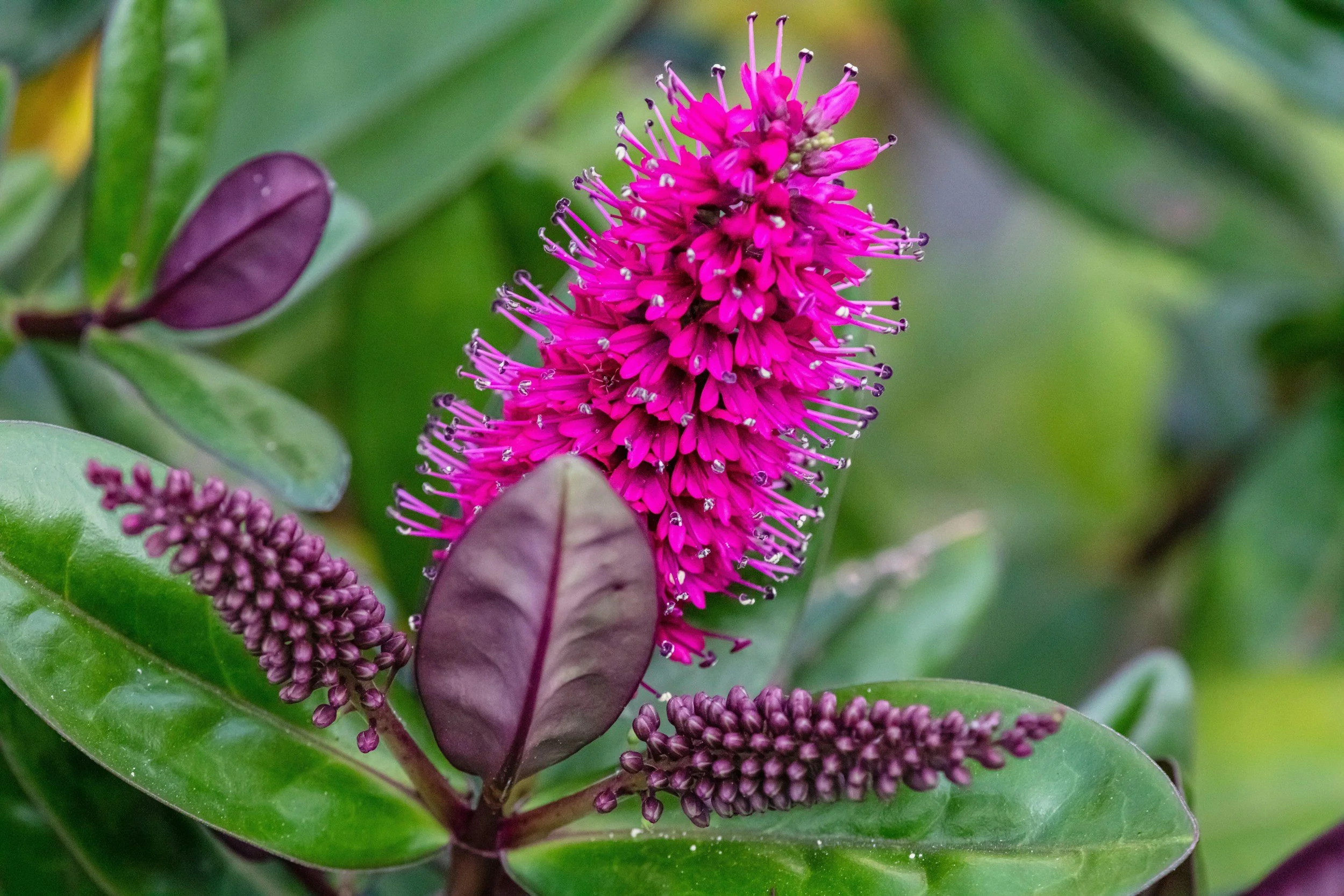
Hebes are absolutely stellar in pots. They’re compact, evergreen, produce beautiful flowers, and handle container life with ease. The smaller cultivars like Hebe ‘Emerald Gem’ stay naturally compact, while larger varieties can be kept tidy with light trimming.
For year-round interest, choose varieties with coloured foliage. Hebe ‘Red Edge’ has leaves margined in burgundy that intensify in cold weather, while Hebe ochracea ‘James Stirling’ offers golden-bronze foliage that glows in winter light. Both handle partial shade and frost, making them versatile for different positions.
Top container Hebes:
Hebe ‘Emerald Gem’ - compact, bright green, white flowers
Hebe ‘Wiri Joy’ - purple-pink flowers, neat growth
Hebe ‘Red Edge’ - burgundy-edged leaves, pink flowers
Hebe pinguifolia ‘Sutherlandii’ - silver-grey foliage, white flowers
Carex Cultivars (Native Sedges)
If you want impact with minimal maintenance, you can’t beat native sedges in containers. They’re drought-tolerant once established, handle wind beautifully, and their fountaining growth adds movement to still compositions. The colour range is spectacular too, from bronze to lime green.
Carex testacea is a container superstar - its orange-bronze foliage looks intentionally designed, and it tolerates both sun and light shade. For shadier spots, try Carex dissita with its cascading bronze-green leaves. Both grow to about 40cm high and wide, perfect for medium to large pots.
The fine-leaved Carex comans varieties are excellent for softer effects. ‘Frosted Curls’ has silvery foliage that catches light beautifully, while ‘Bronze Form’ provides warm colour that complements most plant combinations. They’re also more drought-tolerant than many sedges, important for containers that dry out quickly.
Astelia Chathamica (Silver Spear)
For sheer dramatic presence, few plants match silver astelia in containers. The broad, sword-like leaves in silver-grey create instant architectural impact. It’s particularly effective in modern, minimalist settings where its bold form becomes a living sculpture.
Astelia needs good drainage but appreciates regular watering in summer. It handles frost and shade well, making it perfect for those tricky spots that are shaded in winter but get some summer sun. Use a large container (50cm+) to show off the plant’s full form.
This is a “specimen plant” - it looks best as a solo feature rather than mixed with other plants. Position it where its form can be fully appreciated, perhaps flanking an entrance or as a focal point on a deck. The silver foliage combines beautifully with dark architectural pots.
Libertia Species
Libertias are underrated container plants that offer multiple seasons of interest. The clumping iris-like foliage stays tidy year-round, white flowers appear in spring, and attractive seed heads develop through summer into winter. Several species also offer coloured foliage.
Libertia peregrinans has bronze-orange foliage that looks fantastic in modern containers. It’s compact enough for 20-30cm pots and handles both sun and part shade. Libertia grandiflora has green foliage with showier flowers and works well in shadier spots.
These plants spread slowly but don’t become invasive in containers. Every few years you can divide congested clumps, giving you free plants to pot up for gifts or to expand your collection. They’re also remarkably drought-tolerant once established.
Coprosma Repens Varieties
For year-round colour in containers, Coprosma varieties are hard to beat. The glossy foliage comes in an incredible range of colours - from chocolate-bronze to lime green, pink, and variegated patterns. They handle wind and coastal conditions brilliantly.
‘Tequila Sunrise’ is outstanding in pots, with pink, lime, and bronze foliage that intensifies in cold weather. ‘Coppershine’ offers bronze-chocolate tones that work with virtually any colour scheme. Both stay compact naturally but respond well to trimming if they get too large.
These plants are particularly good for creating year-round container displays. Unlike many flowering plants that have a brief season then fade, Coprosma looks intentional 365 days a year. They also handle some neglect - useful if you travel or occasionally forget to water.
Pittosporum ‘Tom Thumb’
This dwarf pittosporum is purpose-built for containers. It forms a naturally compact mound of burgundy-bronze foliage that deepens in colour through autumn and winter. Tiny dark purple flowers appear in spring with an unexpectedly sweet fragrance.
‘Tom Thumb’ handles shade better than most purple-foliaged plants, making it perfect for shaded balconies or courtyards. It’s also extremely frost-hardy and drought-tolerant once established. The slow growth rate means it won’t need frequent repotting.
Use it as a filler in mixed containers or solo in decorative pots. The dark foliage provides excellent contrast against lighter-coloured plants or creates sophisticated monotone displays when paired with dark containers.
Container Combinations That Work
The best container displays use the “thriller, filler, spiller” principle - one star plant for impact, supporting plants for bulk, and trailing plants to soften edges. This tried-and-true approach works beautifully with natives.
Combination 1: Modern Bronze
Thriller: Astelia ‘Silver Spear’ (architectural form)
Filler: Carex testacea (bronze movement)
Spiller: Muehlenbeckia axillaris (trailing bronze foliage)
This creates a sophisticated, low-maintenance display in bronze and silver tones that looks intentional year-round.
Combination 2: Compact Cottage
Thriller: Hebe ‘Wiri Joy’ (purple-pink flowers)
Filler: Libertia peregrinans (orange foliage, white flowers)
Spiller: Coprosma ‘Tequila Sunrise’ trained to cascade
This offers multiple flower seasons, coloured foliage, and varying textures in a compact arrangement.
Combination 3: Green Sanctuary
Thriller: Small Cordyline ‘Green Goddess’
Filler: Asplenium oblongifolium (shining spleenwort fern)
Spiller: Carex dissita (cascading bronze-green)
Perfect for shaded spots, this creates a lush, layered effect using varied greens and textures.
Potting Mix and Drainage
Never use garden soil in containers. It compacts when watered, restricts air flow to roots, and often contains pests and diseases. Instead, use quality potting mix designed for containers.
Most natives prefer well-drained mixes. Look for products labeled “premium” or “professional” that contain pumice, bark, and other drainage-enhancing materials. Avoid mixes that look very fine and dense - they’ll compact over time and become waterlogged.
For plants that like drier conditions (like coprosma and hebe), consider adding extra drainage material. Mix in about 20% perlite or pumice to increase drainage. For moistureloving sedges and ferns, use standard potting mix without amendments.
Always use fresh potting mix when planting new containers. Old mix breaks down, loses structure, and can harbour root diseases. If you’re reusing containers, scrub them clean and start with fresh mix for best results.
Watering Container Natives
The biggest container gardening mistake is inconsistent watering. Containers dry out much faster than garden beds, and many people underwater until plants show stress, then overwater trying to fix the problem.
Check containers daily in hot weather by pushing your finger 5cm into the soil. If it feels dry at that depth, water thoroughly until water runs from drainage holes. This ensures the entire root ball gets moisture, not just the surface.
In cooler months, reduce watering frequency but maintain the “check before watering” routine. Overwatering in winter is just as damaging as underwatering in summer. Natives generally prefer to dry out slightly between waterings rather than staying constantly moist.
Self-watering containers can be excellent for busy people, but choose wisely. Some natives don’t like the constant moisture these provide. They work well for sedges and ferns but may cause root rot in plants that prefer drier conditions.
Feeding and Maintenance
Container plants need more feeding than garden plants because nutrients wash out with regular watering. Use a controlled-release fertiliser designed for native plants, applied in early spring. This provides steady nutrition for 6-9 months without the risk of over-feeding.
Avoid high-phosphorus fertilisers, which many natives dislike. Look for products specifically labeled for native plants or use organic options like blood and bone. Apply according to package directions - more is definitely not better with natives.
Prune container plants to maintain shape and encourage compact growth. Many natives respond to light trimming by producing denser foliage. Do major pruning in late winter before spring growth begins, but light tidying can happen anytime.
Every 2-3 years, most container plants benefit from repotting into fresh mix. Do this in early spring when plants are actively growing. Either move up one pot size or trim roots and replant in the same container with fresh mix.
Problem Solving
The most common container problem is plants drying out too quickly. If you’re watering daily and pots still dry out, consider moving them to less exposed positions, upgrading to larger containers, or adding water-retaining crystals to the potting mix.
Root-bound plants show stunted growth and dry out very quickly. Check every spring by carefully removing plants from containers. If roots are circling densely around the edge, it’s time to repot. Don’t put this off - severely root-bound plants struggle even with perfect care.
Salt build-up appears as white crust on soil surface or pot rims. This happens in areas with hard water or from fertiliser accumulation. Leach pots occasionally by watering thoroughly several times in succession, allowing water to run through. This washes out accumulated salts.
Pests are generally less problematic in containers than garden beds, but watch for aphids on new growth and scale on stems. Most pests can be dealt with by blasting them off with water or removing affected growth. Healthy, well-fed plants resist pest problems better.
Making the Most of Limited Space
Container gardening lets you have a proper garden in impossibly small spaces. A single balcony can hold a surprising number of pots when you think vertically and use walls and railings effectively. Wall-mounted planters, hanging baskets, and tiered plant stands multiply your growing space.
Choose containers in complementary colours and styles to create cohesion. A collection of mismatched pots can look cluttered, while coordinated containers in similar tones create a designed look. You don’t need identical pots - just a unifying element like material, colour, or style.
Don’t forget about heights. Use upturned pots or purpose-built stands to create different levels. This adds visual interest and ensures all plants get adequate light. Taller containers in back, shorter in front creates depth even in very small spaces.
Your container garden can evolve with the seasons. This is one of the huge advantages over permanent plantings. Swap out plants that aren’t performing, rearrange for better effects, or completely refresh displays seasonally. The flexibility is liberating.
Creating Your Container Native Garden
Start with just a few containers and plants you genuinely love. It’s better to do a few pots really well than spread yourself too thin across many mediocre attempts. Choose quality containers and potting mix, select proven performers from the list above, and give them proper care.
Pay attention to what works in your specific conditions. That perfect plant for someone else’s sunny balcony might struggle in your shaded courtyard. Learn from successes and failures alike, and gradually build a collection of plants that thrive in your space.
Container gardening with natives brings New Zealand’s unique flora to wherever you live. It’s gardening that fits modern life - flexible, manageable, and beautiful. Your tiny balcony or courtyard can become a genuine native sanctuary, one thoughtfully chosen pot at a time.
